|
|
Progress through Photos
This webpage is devoted to Progress through Photos; as the
construction of the LWDA test station at the VLA develops and sites for other
LWA stations are explored, we will replace older photos with newer ones.
Additional photos may be found on the
LWA Wiki
Second summer Work Party
at the LWA-1 site.
(July 25, 2009 )
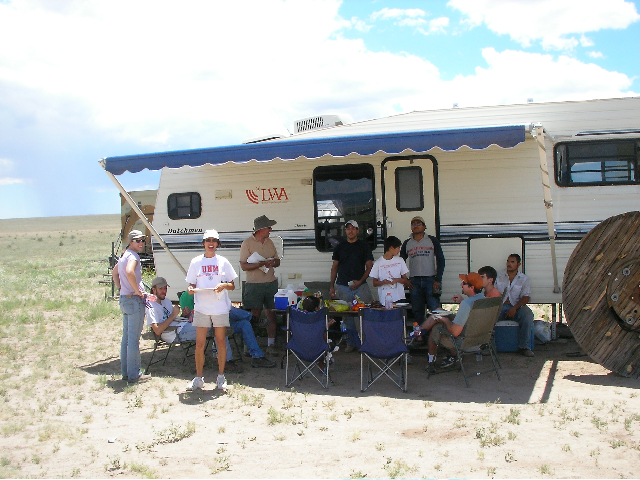
The second LWA-1 work party was held on a Saturday. The day was spent putting conduit into the trenches.
|
|
Taking a lunch break to eat barbequed ribs in the shade of the trailer!
|
Construction continues
at the LWA-1 site.
(July 10, 2009 update)
Here are some more photos from the on-going construction this summer.
|
|
|
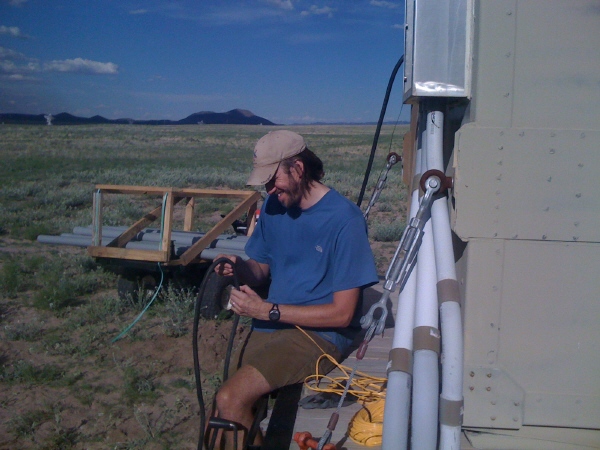
Astrophysics graduate student, Steven Tremblay, is feeding the fiber-optic cable (yellow-orange) for the internet connect to the hut into flexible conduit (black).
|
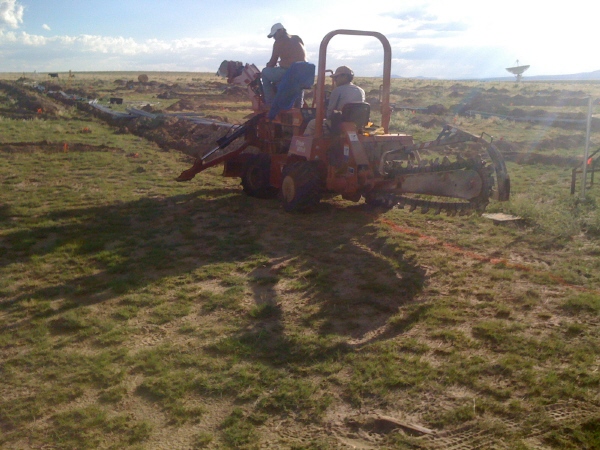
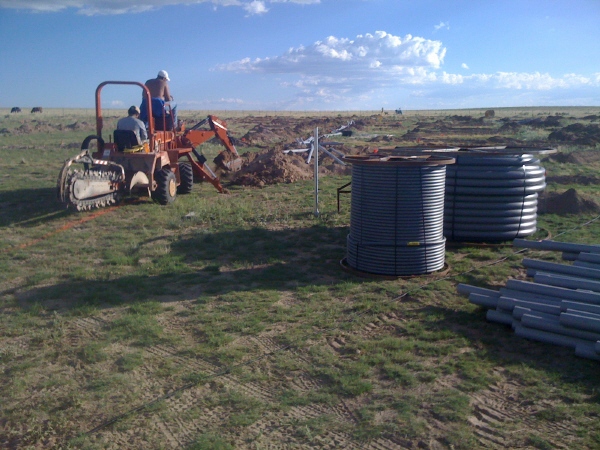
The trenching continues.
|
|
|
Another view of the trenching, cables, and conduit. |
|
|
First of the summer Work Parties
at the LWA-1 site.
(June 24, 2009 )
The first summer work party at the LWA-1 construction site was held on Wednesday June 24.
Adam Martinez, UNM Graduate Research Assistant in Construction Management is the Manager of the
summer construction crew which consists of undergraduate and graduate students from Civil Engineering.
Among the senior LWA staff participating in the work day were Lee J Rickard, Executive Project Director, and
Walter Gerstle, Civil Engineering Professor. Three UNM undergraduate majors in Astrophysics did
most of the heavy work.
Photos courtesy of Hélène (Lanie) Dickel , UNM Adjunct Professor.
LWA summer crew members:
Adam Martinez, LWA Construction Manager and graduate student in Construction Management
AJ Gallardo, undergraduate student in Construction Management
Sunil Danthului, graduate student in Construction Engineering
Sudipta Ghorai, graduate student in Construction Engineering
Volunteer undergraduates, majoring in Astrophysics, who participated in the 1st Work Party
Matthew Koppa, Dave Martin, and Anthony Ortiz
|
|
|
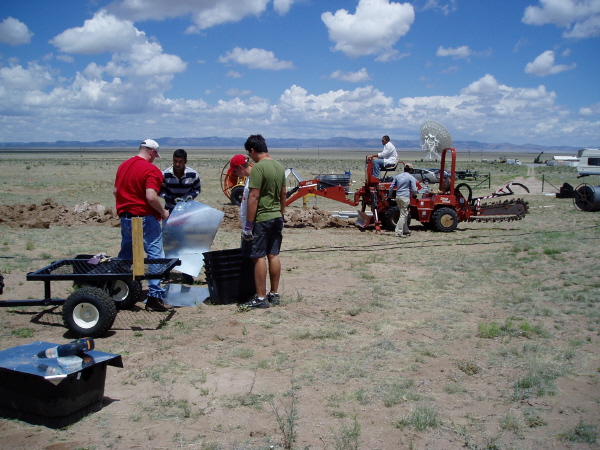
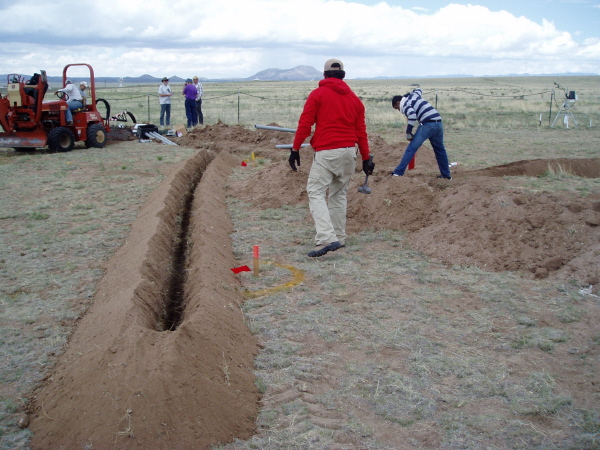
Trenching and preparing junction boxes.
|
Short trenches spoke to where blade antennas will be located.
|
|
|
|
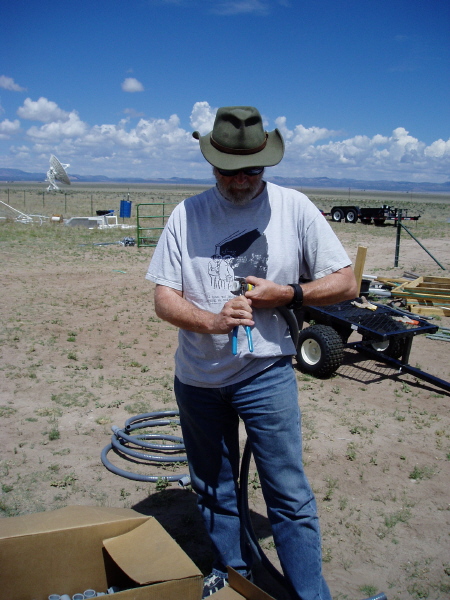
Lee J shows how to put the connectors
onto the short conduit pieces which will connect from the
ground to the top of each blade antenna.. |
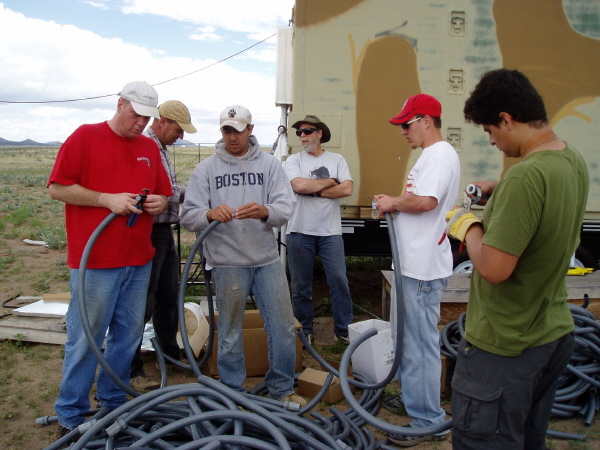
Walter in back left and students take over from Lee J and complete the outfitting of the conduits with connectors.
|
|
|
|
|
|
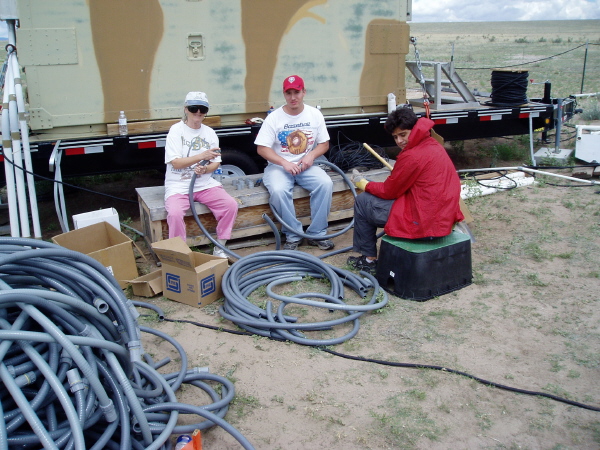
(Above) Lanie joins in the conduit connector task. The done
pile at lower left is now much larger than the
small pile of conduit pieces awaiting connectors.
|
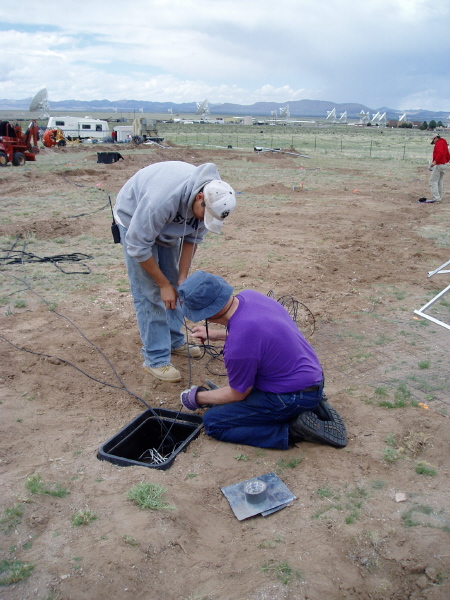
Adam Martinez and John Dickel (UNM Adjunct Prof)
successfully test inserting an extra cable through
a conduit already filled with 28 cables - from one
junction box to another. |
|
|
Construction begins at LWA site 1
(June 2009 )
Construction of the first station of the LWA began on June 2nd and is progressing well.
Surveying has been completed and the current focus is on trenching for the conduits. As of
June 16th, one full branch has been trenched and laden with conduit.
The shelter has been ordered.
Photos courtesy of Adam Martinez.
|
|
|
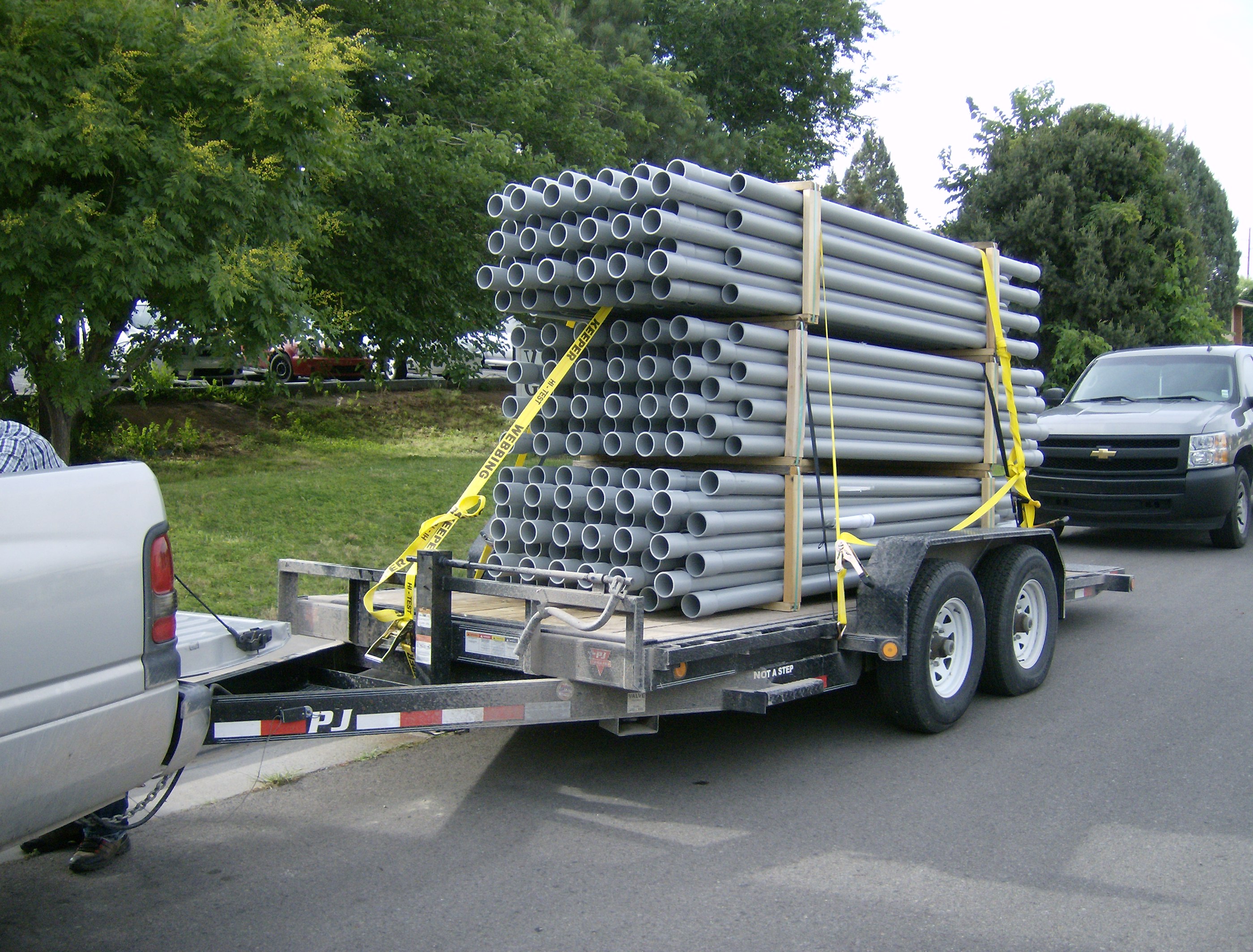
A load of conduit pipes.
|
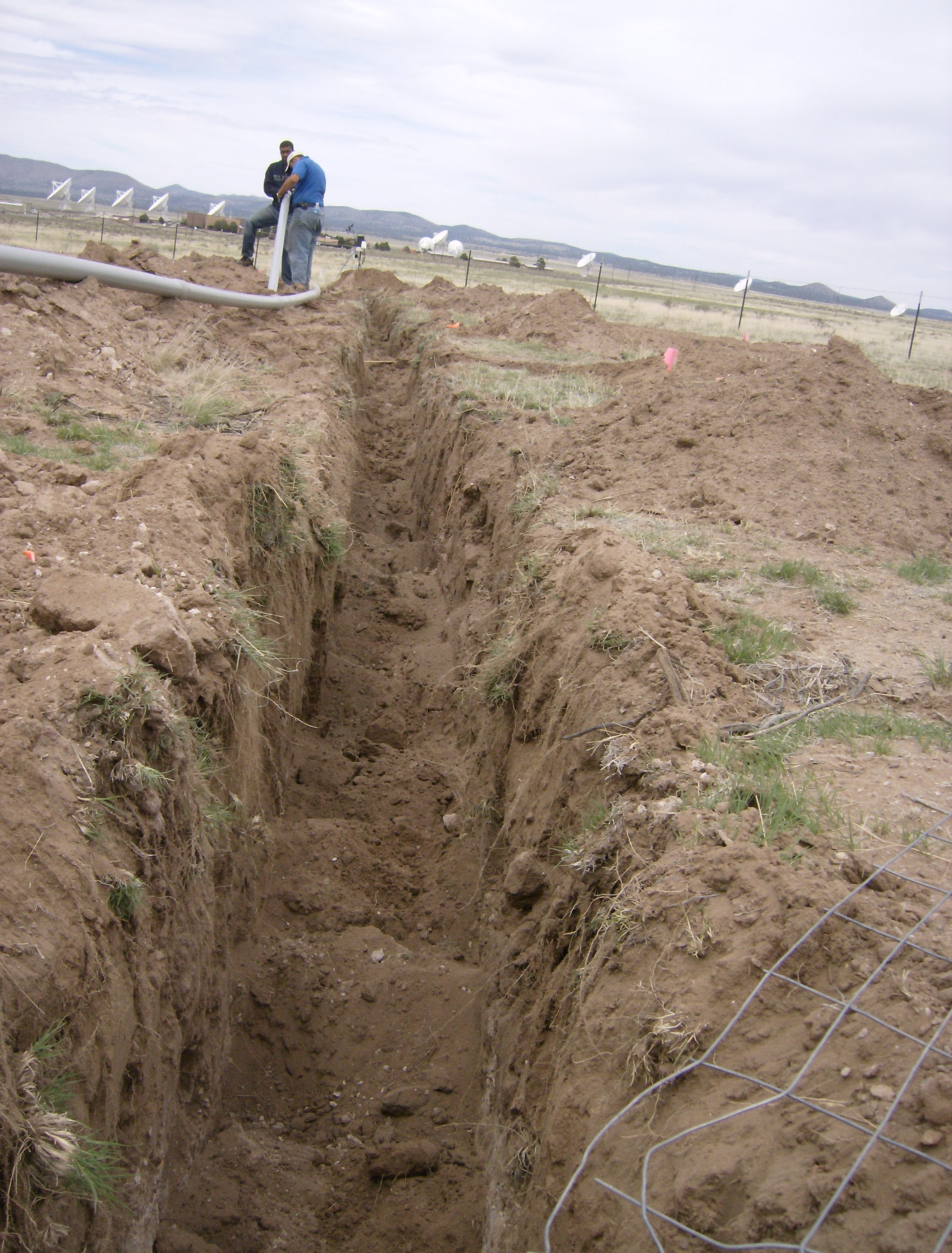
Trench ready to be filled with conduit.
|
|
|
|
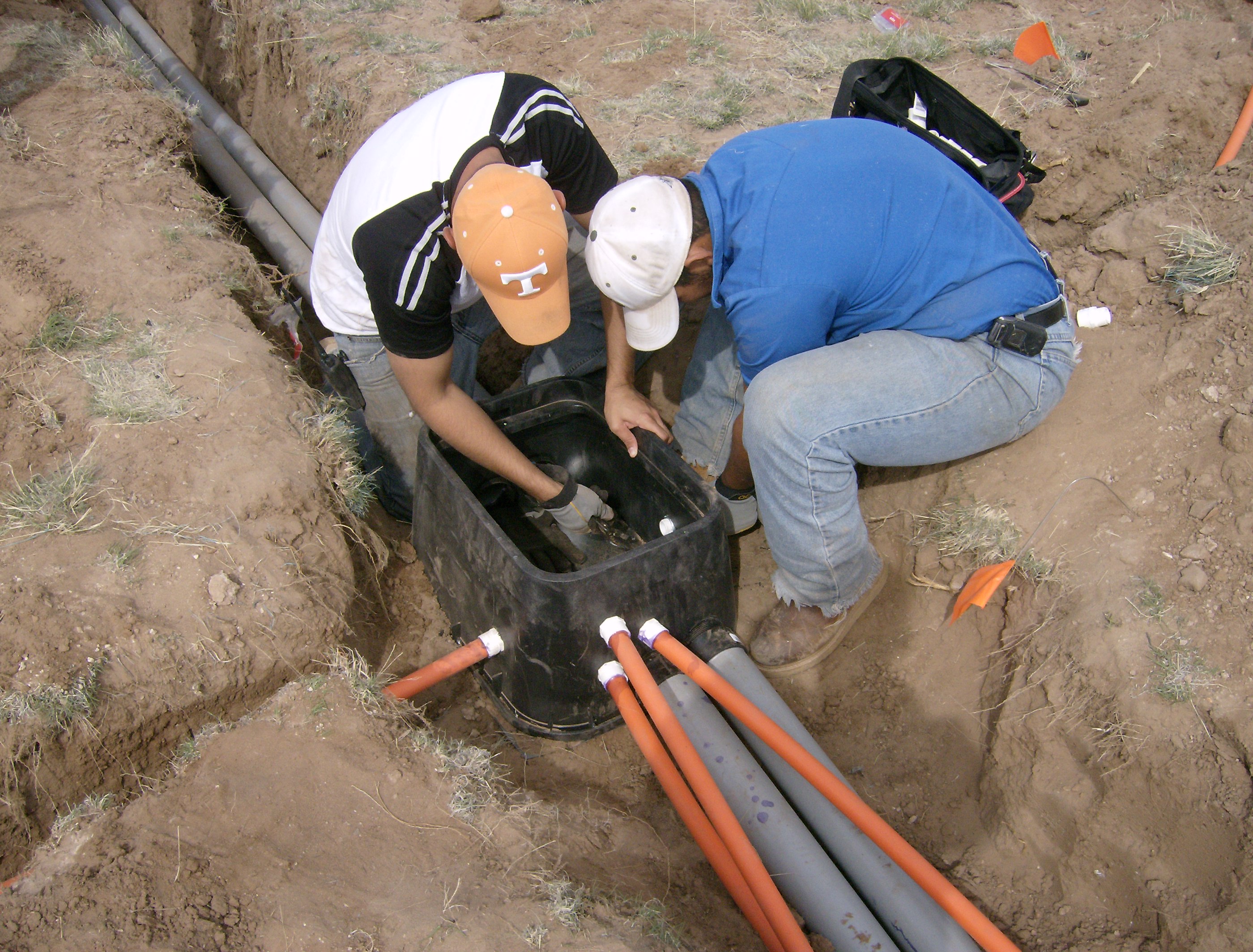
Connecting everything up in the junction box. |
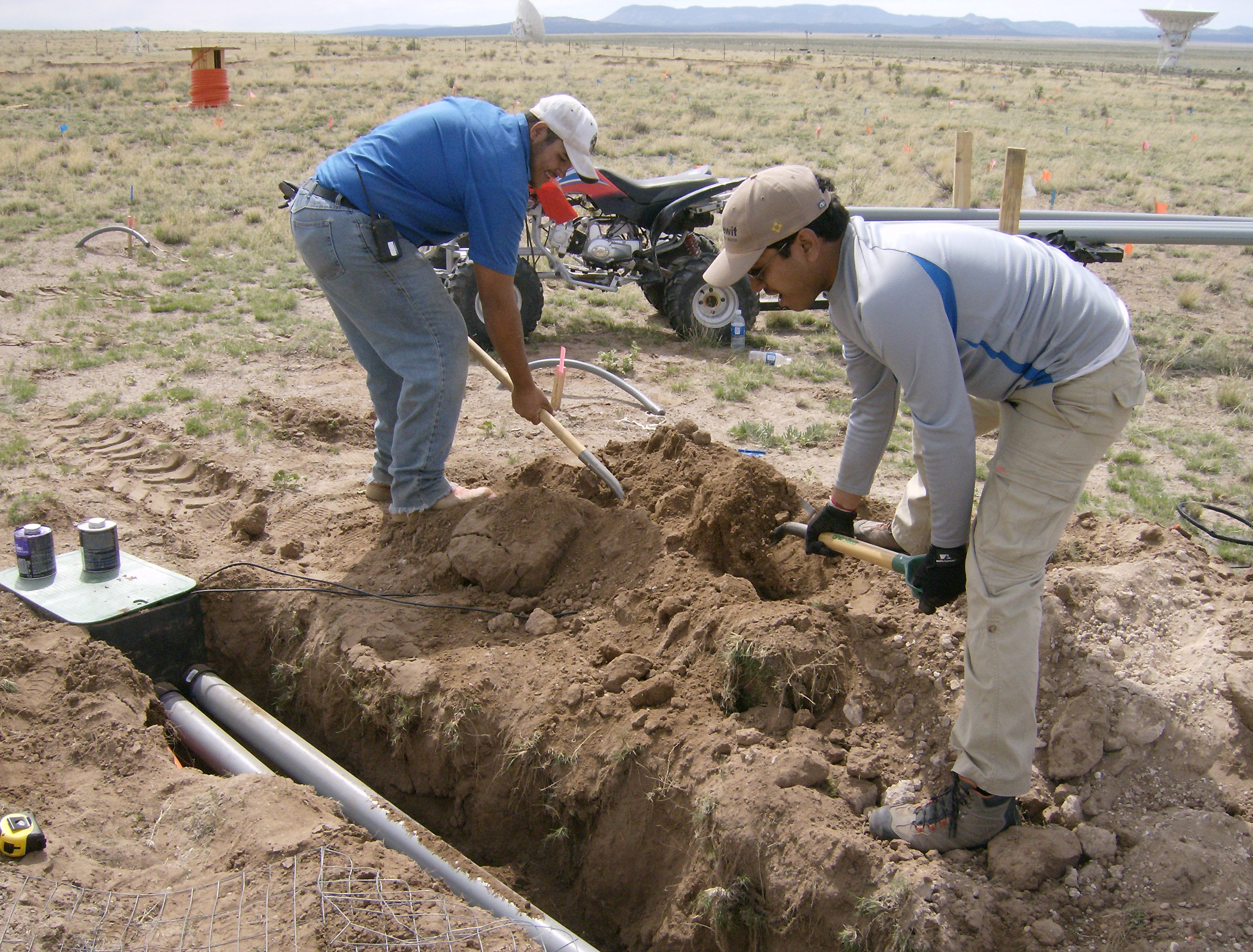
Covering up the filled trench with dirt.
|
|
|
LWA Review for Long Lead Items (June 01 2009 )
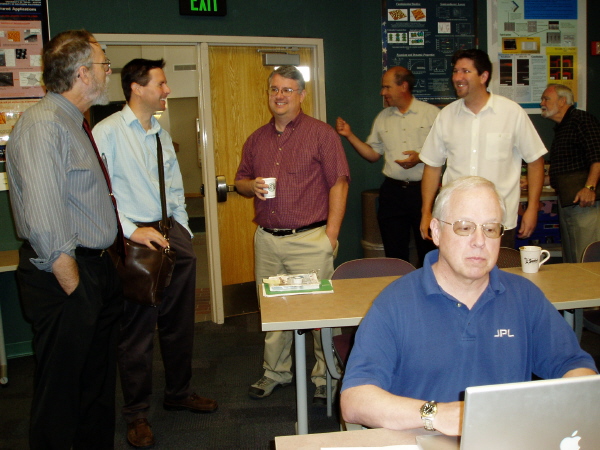
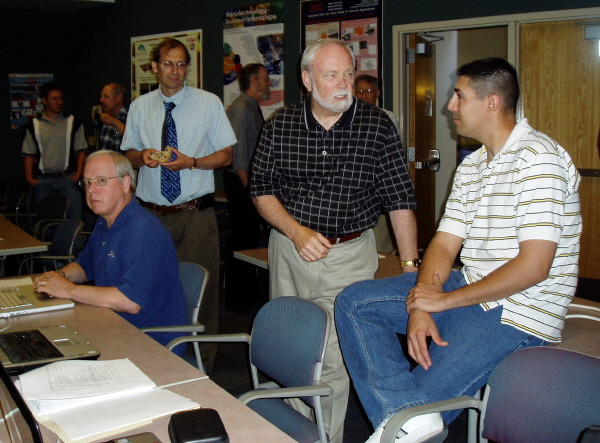
A meeting of LWA staff, Review Committee members, UNM officials, professors, and graduate students was held June 1, 2009 on the UNM campus
to present and discuss the current status and upcoming plans regarding the construction of the
first station of the Long Wavelength Array.
Photos courtesy of Lanie Dickel.
|
|
Some of the participants chat over coffee before the meeting begins.
|
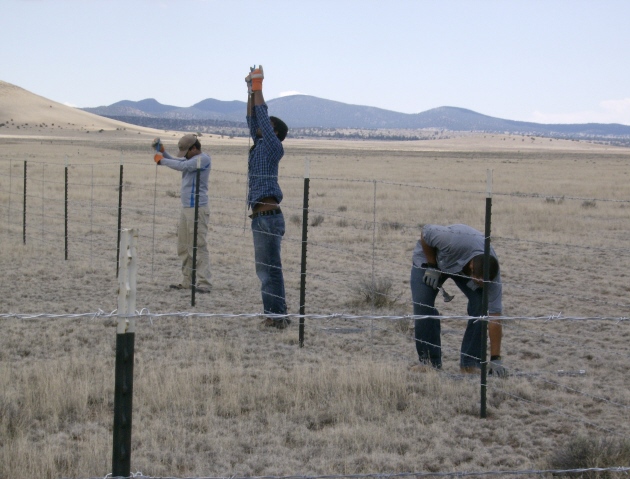
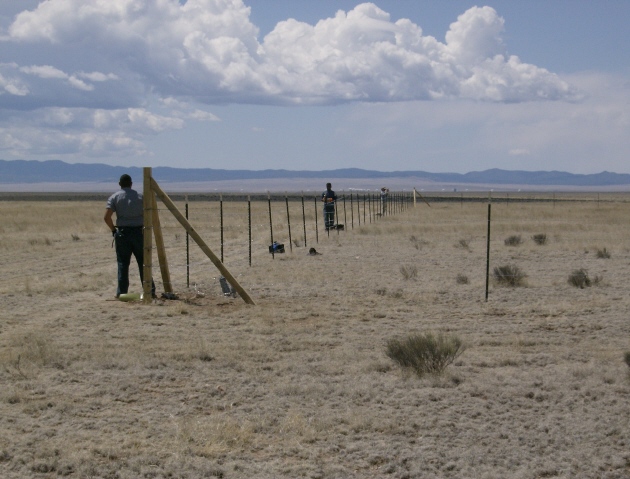
Fencing installed at LWA site 2 (May 27 - 28 2009 )
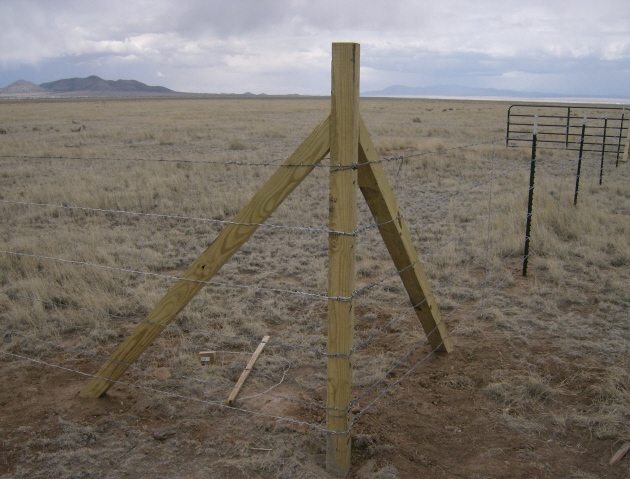
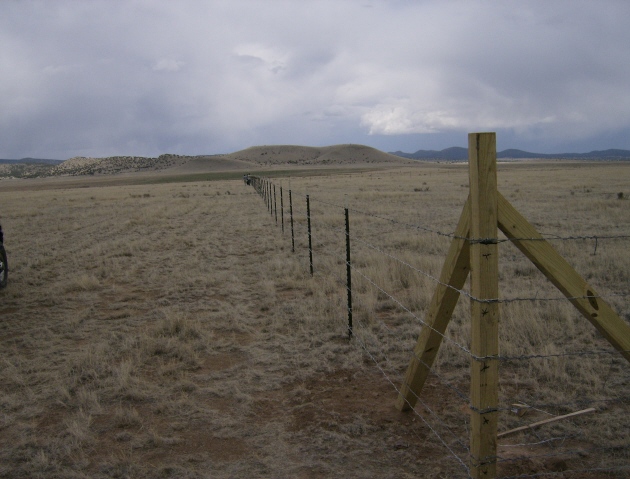
UNM graduate students in civil engineering return in May to install the fencing around the 120m x120m
LWA site 2 (near the end of the north arm of the VLA) . Photos courtesy of Joe Craig.
|
|
|
Details of the construction of a corner
for the fencing around the LWA site 2. The gate
can be seen at the upper right of the photo.
|
Looking along the fence with a couple of
graduate students barely visible in the distance.
|
|
|
|
Putting in the separators which keep the horizontal wires apart.
|
Looking back towards the VLA (in a compact configuration)
in the distance.
|
|
|
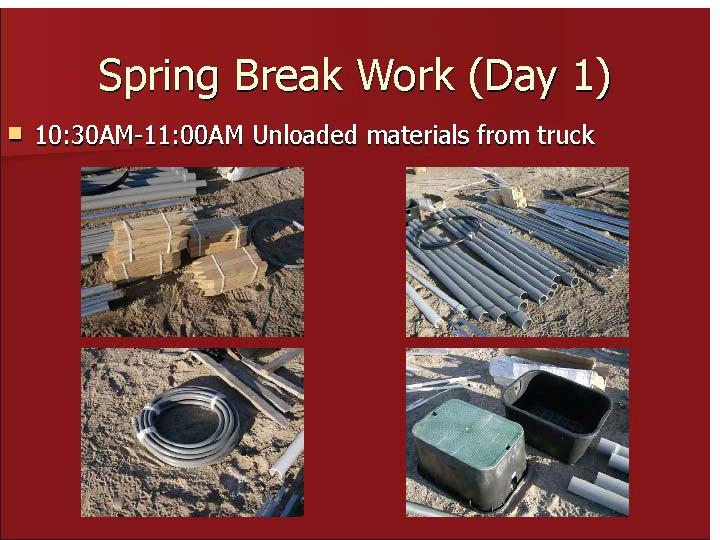
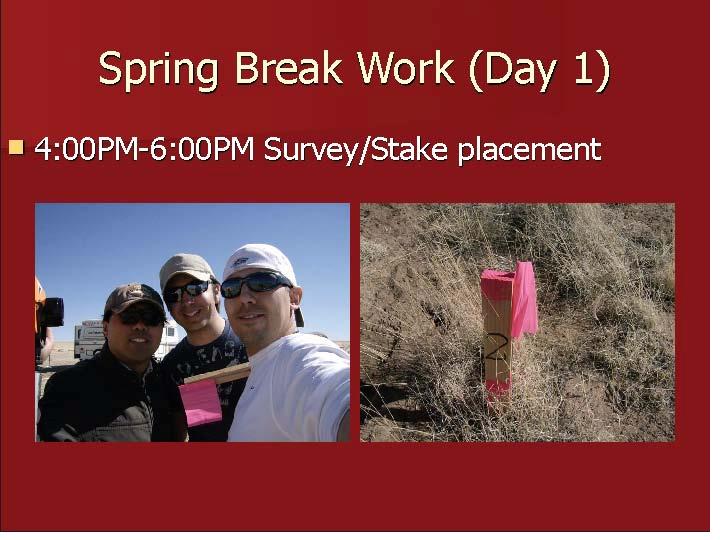
Spring Break Work Week (March 16 - 19, 2009)
UNM students surveyed, trenched, pulled cables through conduit, and conducted
various tests on the new Oz-post under the direction of Joe Craig, LWA Programs Operations Director with the
assistance of Adam Matrinez, graduate student assistant in Civil Engineering (working under Prof. Walter Gerstle). All the
photos are available in a power-point file and
the associated document
describes the daily schedule and accomplishments.
|
|
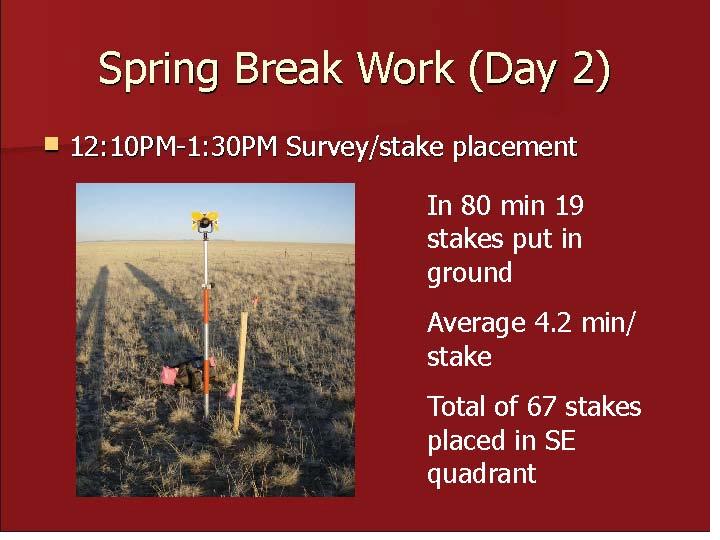
Monday March 16 - tasks included - clean up ground screens, secure RV, reposition weather
station, survey 5 locations.
|
|
|
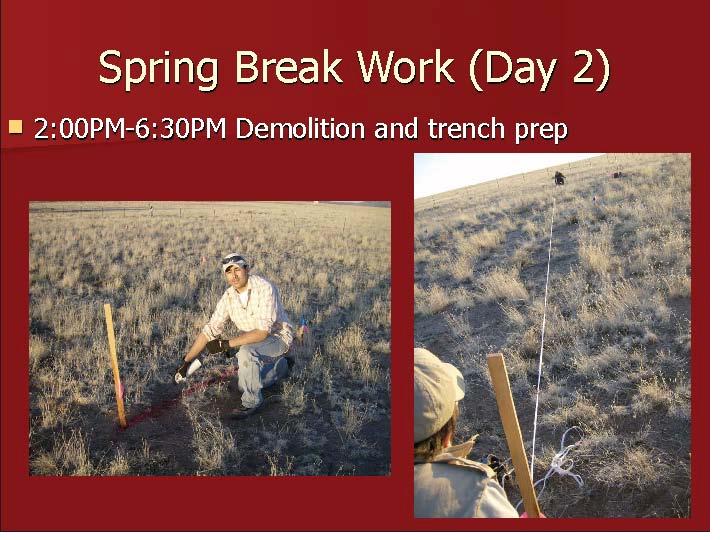
Tuesday March 17 - more surveying and preparation begun on the junction boxes.
|
|
|
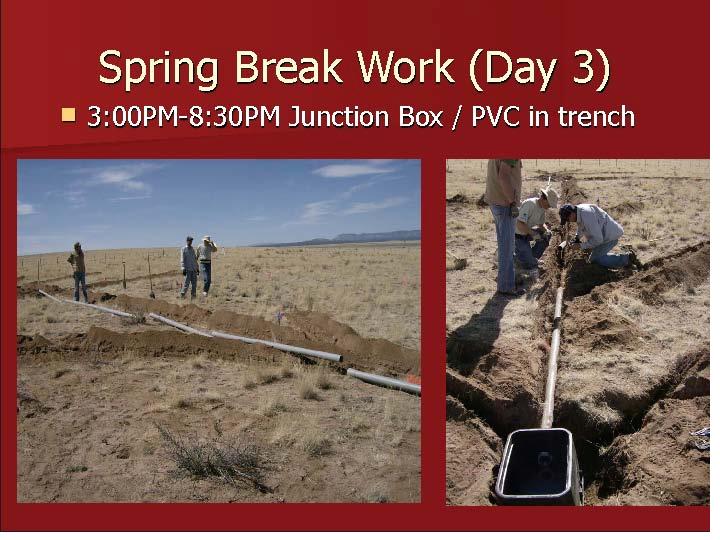
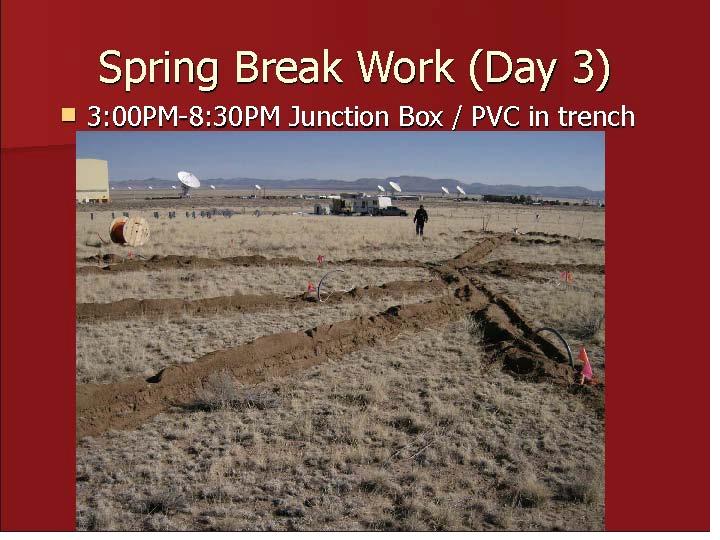
Wednesday March 18 - lots of trenching, modifications to junction boxes, and discovery that
hard flexible conduit will work better than the straight conduit sold in sticks.
|
|
|
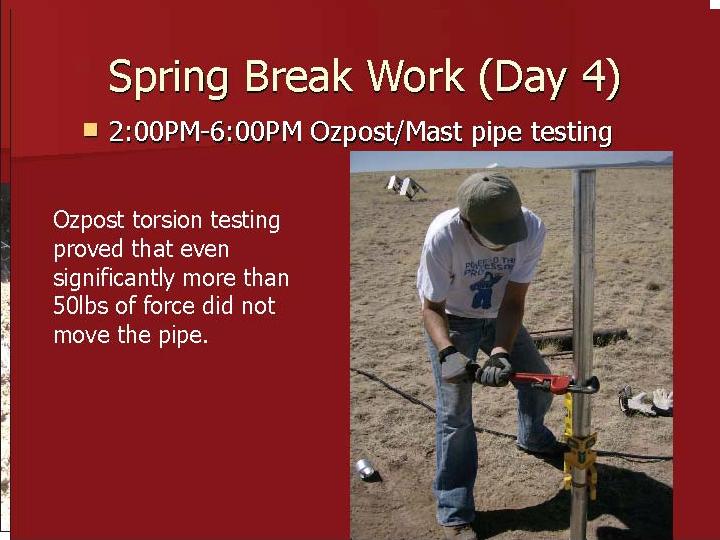
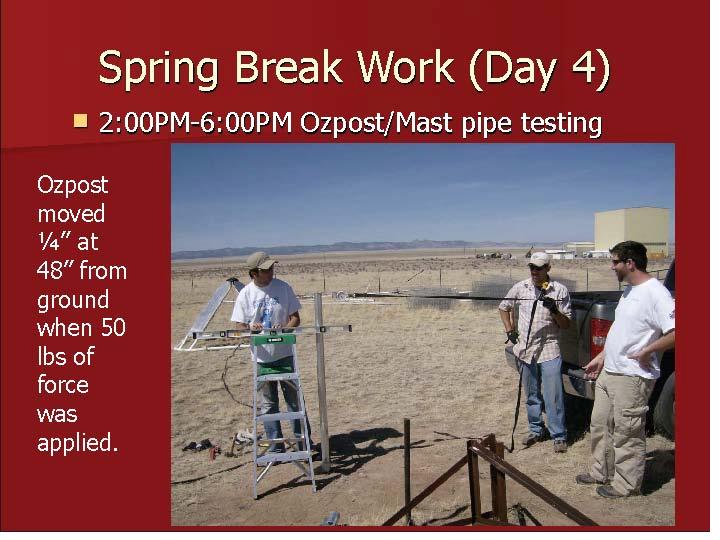
Measuring the forces required to deviate the posts by some angle.
The Oz-Post performed so well that one was installed in an actual
antenna location; torsional testing was conducted and determined to be no threat.
The mast did not budge.
|
|
Thursday March 19 - morning and afternoon spent filling in the trenches with shovels.
It was extremely easy to pull cables through the junction box system. The only concern left in the
conduit design is whether 28 cables can be pulled easily in the 3" conduit.
|
More trenching experiments
(January 10, 2009)
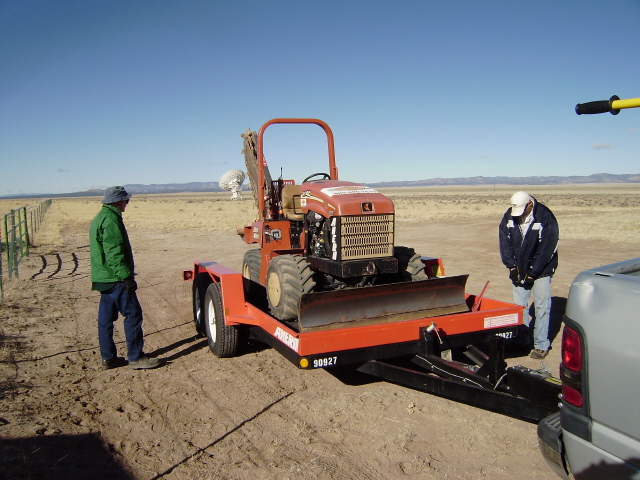
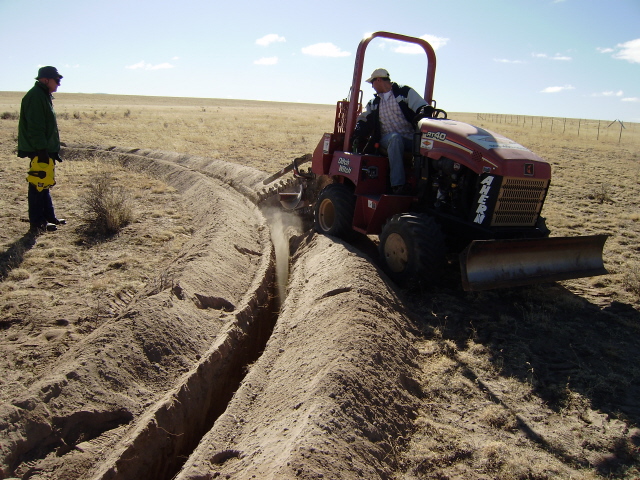
On January 10, 2009, a new trencher was rented and brought to the LWDA site to make more
tests. This trencher is more efficient and able to get through
more difficult areas better than the smaller, hand pushed one that
we tried during our first attempt in November 2008.
|
|
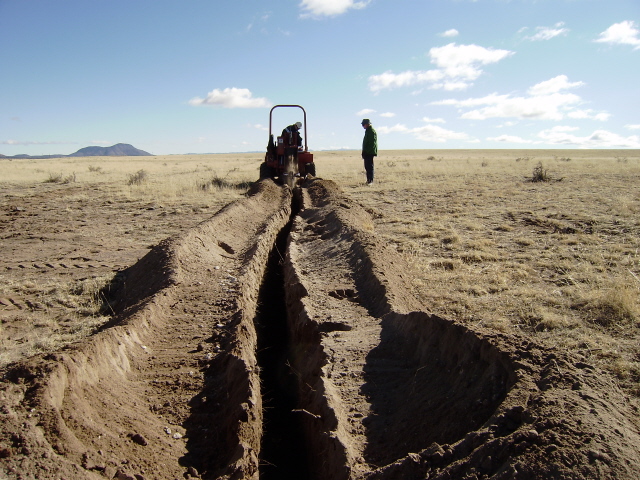
View of the trencher and the first trench made with it.
|
|
|
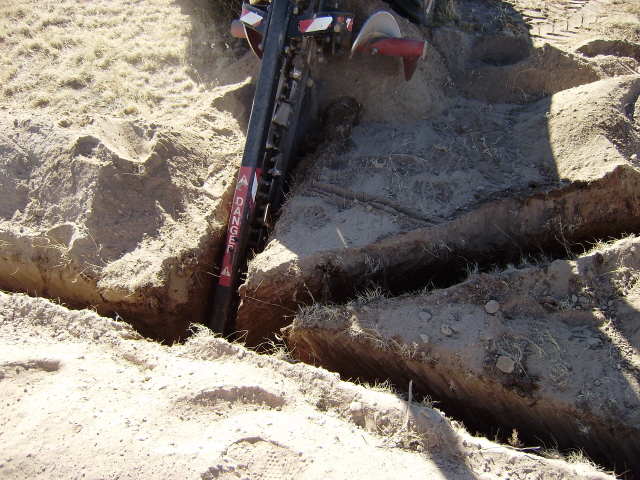
The trencher can make curved trenches (radius of 32 feet) and intersecting
trenches. For the latter, it is necessary to back up to the original trench;
one can not cross a trench when making an intersection.
|
Mobile Workstation
(November 2008)
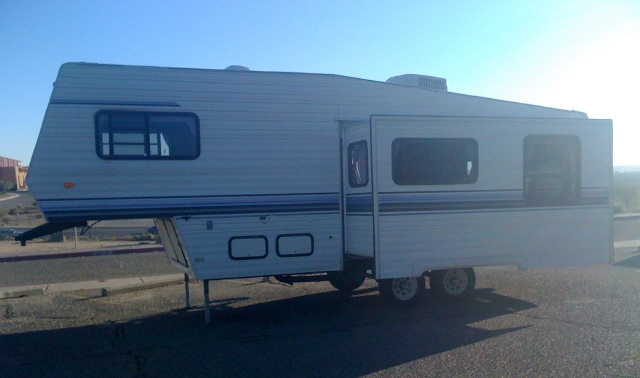
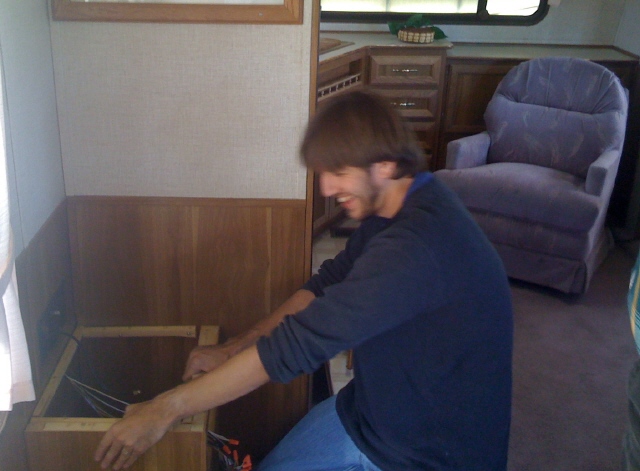
The new mobile workstation is being fitted up for operation at
the sites. Thanks to support from the Department of Physics and
Astronomy at UNM, there is now a truck available to tow the
workstation.
|
|
Outside and inside the new LWA Mobile Workstation.
|
return to top
Trenching
(November 2008)
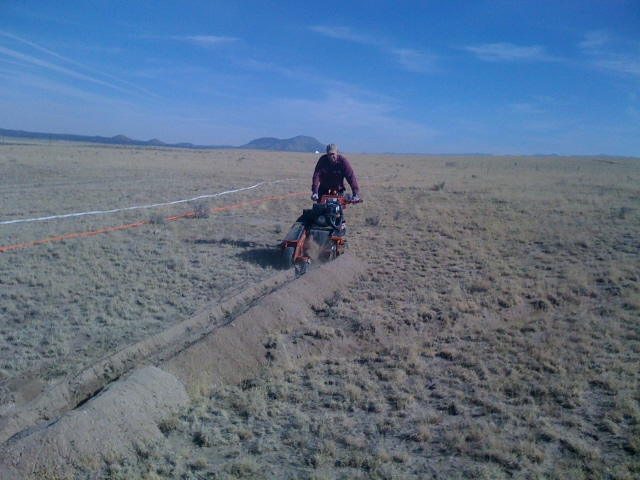
Trenching between the LWDA site and the RTA site (300m away)
was carried out on November 22. The previous, above-ground cable
had been damaged. The LWDA-RTA interferometer is in continuous
use, so replacement of the cable was necessary. But this work also
enables us to do some measurements of the effects of dispersion
in the cable under the varying environmental conditions, and
gives us experience with the equipment and
procedures for burying cables.
|
|
Making the trench with the trencher; cables from one of the blade antennas goes into the trench.
|
|
|
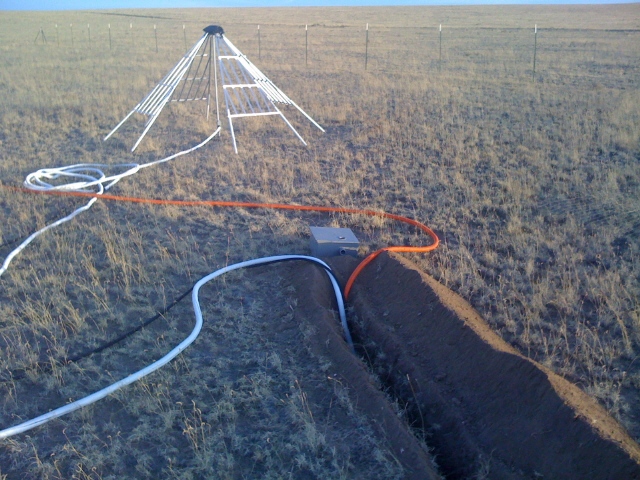
The trench goes 1,000 feet from the shelter which is seen in the distance to the LWDA Rapid
Test Array (RTA). The junction box with its cover plate is shown in the foreground;
it is located at 500 feet from the shelter.
|
return to top
"Brassboard" analog receiver built and tested
(September 2008)
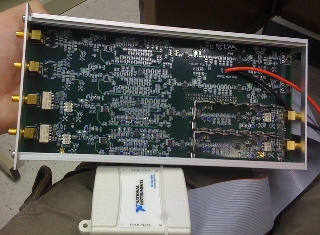
The "Brassboard" Analog Receiver for the LWA was designed at UNM by Joe Craig,
LWA Systems Engineer. Each receiver board/module contains four independent
receive channels. Each channel provides a maximum gain of 80dB, with 60dB of
gain control in 2dB steps, spread out over two digital step attenuators which
balance the receiver's noise figure against linearity performance. The
receiver has a reconfigurable filter bank with three selectable filters; 20
MHz-80 MHz "Full Bandwidth" filter, 28 MHz-54 MHz "Reduced Bandwidth" filter,
and a "Split Bandwidth" filter to provide additional independent gain control
over the low-frequency portion of the spectrum (diplexer split at 32 MHz).
Along with these filters, there is also an "FM Notch" filter to attenuate the
FM band. In addition to gain and filtering, the receiver also has an
integrated Bias-T for powering the Front-End Electronics (FEE) and control
logic for switching on and off the FEE power. The logic interface is standard
TTL/CMOS static I/O interfaced over a ribbon cable.
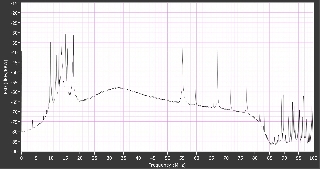
The spectrum shown is 100ms integration of 200MSPS time data, FFT'd with a RBW
of 30kHz in the "Full Bandwidth" filter configuration. This data was acquired
with the current LWA receive chain at the LWDA/VLA site on Sept. 6th, 2008.
|
|
Joe Craig's brassboard analog receiver and the test spectrum.
|
|